

PBL
AI in Visual Computing
Build intelligent visual systems using AI to power applications in 3D modeling, object detection, image generation, and advanced sensing.

Project
Location
Online
Duration
8 Weeks
Upcoming Sessions
Sep. 14 - Nov. 13, 2026
Outcomes
Master visual computing techniques for AI applications
Build 3D models from 2D images using neural networks
Apply object detection with YOLO and Faster R-CNN
Generate images using GANs and diffusion models
Use PyTorch3D and Instant-NGP for scene rendering
You Will Get
Industry Guidance
Work directly with our project leads—experts and top researchers—who bring their real-world insights and expertise straight to your learning experience.

Research Experience
Collaborate with teammates and the project lead in a multi-week project to pursue novel questions in your research field.

Peer Networks
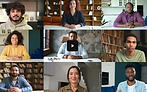
Engage with our PBL participants from all over the world. Collaborate with new peers and learn about their own research endeavours.
.png)
A Strong Portfolio
Put your best foot forward in the PBL with a standout project and receive a PBL Evaluation Report that can be used as a recommendation letter for employers and grad schools.

Expert Guidance
Get personalized feedback to grow your research and innovation skills.

Deliverables
Real projects, lasting connections, and new opportunities beyond your program.
Project Deliverables
The final presentation of your 8 weeks could be a poster, written report, or a slide deck, all of which can be expanded on.
Research Extension
Utilize up to 5 additional meeting times with the project lead after the project’s conclusion to build your work out for publication or conference presentation.
Industry Network
Meet peers in your projects and participate in a global talent community both online and in-person.
Industry Application
This PBL reflects the growing demand for AI-powered visual systems across industries like consumer electronics, autonomous vehicles, AR/VR, and media production. Companies such as Apple, Meta, Unity, Tesla, and Boston Dynamics use technologies like 3D modeling, object detection, and sensor fusion to power immersive, intelligent, and interactive applications. Students will gain hands-on experience aligned with real-world innovation at the intersection of AI and visual computing.
Popular Industry Positions
Computer Vision Engineer
Design AI systems that interpret visual data for autonomous vehicles, robotics, and smart cameras.
3D Graphics or Simulation Engineer
Build real-time 3D environments and simulations for AR/VR, gaming, and digital twins.
AI Research Engineer (Perception & Imaging)
Develop machine learning models for image generation, scene understanding, and multimodal sensing.
Tracks
Track 1
3D Scene Modeling and View Synthesis
Build 3D worlds from 2D images using AI tools used in AR, VR, and film.
Learn how AI reconstructs 3D scenes from photos, like in gaming or VR.
Explore how techniques like NeRF help visualize depth and perspective.
Use beginner-friendly tools like Instant-NGP and PyTorch3D.
Discover how these models are used in animation, design, and tech.
Perfect for students interested in Meta, Pixar, Apple, or immersive media.
Track 2
Object Detection and Classification
Teach AI to recognize and label objects in images—just like in self-driving cars or security systems.
Learn how modern AI models detect objects in real-world scenes.
Try hands-on tools like YOLO and Faster R-CNN with real datasets.
Understand how to evaluate model accuracy and improve results.
Explore how this tech powers robots, drones, and smart cameras.
Great for careers in Tesla, Waymo, Amazon Robotics, and startups.
Track 3
Image Synthesis
Use AI to create original images—from realistic faces to wild artistic styles.
Learn how GANs and diffusion models generate new images.
Train your own models to create high-quality visuals from scratch.
Work with popular datasets like CelebA and LSUN.
Apply skills in content creation, digital fashion, or AR filters.
Ideal for careers at Adobe, Snapchat, Instagram, or creative tech labs.
Track 4
Extreme Sensing Beyond Conventional Cameras
Discover how AI can interpret invisible signals using futuristic sensors.
Explore high-tech tools like LiDAR, radar, and thermal cameras.
Learn how AI helps these sensors “see” in fog, dark, or tough terrain.
Combine data from multiple sensors to build smart systems.
Apply this to fields like space exploration, disaster response, and drones.
Perfect for students aiming for NASA, DARPA, or frontier tech companies.
PBL Journey
Online PBL Projects meet once a week for 8 weeks, and follow the research project format. Participants will meet the project lead, learn the conventions of the field and familiarize themselves with the tracks, then spend the middle portion of their time collaborating to develop their research.
At the end, participants will present their final project and receive feedback, with the opportunity to extend their timeline and develop the project in greater depth.
.png)
Project Team
Our Academic Team plays a vital role in your PBL journey at Blended Learning. We are dedicated to enhancing your learning experience and ensuring your academic success. Our team consists of three distinct roles, each with a specific focus to support your Research Guidance, Project Progress, and Personal Growth.

Project Lead
Providing Industry and Research Guidance
Researcher at MIT Media Lab
He is an NSF Graduate Research Fellow and CVPR Best Paper Finalist whose work advances computer vision for extreme environments like low light, high speed, and non-line-of-sight imaging. He focuses on single-photon sensing and physics-based vision, combining novel neural techniques with real-world perception challenges. He earned his MS from MIT and BS in Electrical Engineering from UCLA.

Academic Advisor
Tracking Your Project Development
The Academic Advisor is dedicated to your project completion success. They manage the progress of your PBL, guiding team formation, facilitating group discussions, and resolving conflicts. Additionally, the Academic Advisor ensures team member contributions are on track and provides logistical support, including attendance tracking, hosting recitation sessions, managing research support requests, and conducting student evaluations at the end of the PBL.
From Our Students
"After a night spent debugging, I suddenly discovered the program running perfectly. In that triumphant moment, you realize your true capability and success. The exhaustion fades, replaced by the thrill of knowing your skills and persistence led to this achievement, reaffirming your potential."

Nicole Y.
National University of Singapore
B.S. Economics
FAQs
What is the learning format of a PBL?
All PBLs are offered in an 8-week online format that begins with an orientation followed by subject setup overview of the different tracks. The majority of the session time is dedicated to project development, with a final presentation at the culmination of the 8 weeks. Many PBLs are also offered bi-annually in an on-campus format that consists of daily in-person meetings.
How long does each PBL cohort last?
One round of the Online PBL cohort lasts 8 weeks, preceded bys a pre-PBL orientation week. Each On-Campus PBL usually has 8 in person meetings, with intensive classroom education and collaboration. This means the biggest difference between online and on-campus PBLs is time participants have in between meetings.
How can I be more academically prepared before the PBL starts?
Review the Blended Learning Insights sent by the Academic Advisor and familiarize yourself with the project topic and pre-learning materials. Ensure you have all necessary softwares and other resources needed for the PBL.
For each PBL cohort, will I work in teams? Are PBL team members self-selected or assigned?
Yes, you will work in teams for each round of the PBL Cohort. Each team has 3 to 6 participants, organized by the Academic Team. The Academic Advisor will organize groupings based on students' backgrounds, preferred track, and skills.
Can I work with the Project Lead on my project after the PBL ends?
Yes, with your AI + X Research Plan, you may request up to five PBL Research Extension meetings, where you work with the project lead to develop your project into a working manuscript. To schedule a PBL Research Extension meeting, talk to your Academic Advisor at the conclusion of your PBL.
What do I receive at the end of the PBL?
At the conclusion of the PBL cohort, you can request a PBL Evaluation Report which summarizes the PBL content, the hours you spent, the track you chose, and includes a recommendation letter from the Project Lead (for eligible participants who completed the project successfully).
Is attendance mandatory for PBL Live Sessions and Recitation Sessions?
Yes, attendance is mandatory for both PBL Live Sessions and Recitation Sessions. Participants with three or more unexcused absences forfeit their eligibility for a PBL Evaluation Report.
Do I need to have my camera on during online PBL Live Sessions?
Yes, you must have your camera on during online PBL Live Sessions. Participants with cameras off will be marked as absent. This is meant to encourage active engagement and participation in meetings.


