

SPOC
Machine Learning, Modeling, and Simulation Principles
Master key principles of modeling, simulation, optimization, and machine learning through hands-on problem-solving techniques

Learning Platform
MIT xPRO Learning Platform
Location
Online
Duration
6 Weeks
Upcoming Sessions
Jul. 20 – Aug. 31, 2026
Outcomes
Optimize models using Gradient Descent and Newton’s Method
Solve linear and nonlinear systems using direct methods
Implement Spatial Discretization in simulation models
Apply Forward Euler and Implicit Methods for stability
Model and solve ordinary and partial differential equations
You Will Get
Official Certificate From MIT
Elevate your credentials with globally recognized certifications and 2.5 CEUs.

Live Interactive Sessions
Select private cohort SPOCs have the opportunity to meet and interact with the professors who guide the SPOC video content in special one-hour seminars.

Modules
MODULE
1
Modeling and Simulation Fundamentals
Learners will learn the basics of ordinary differential equations (ODEs) and numerical methods to solve them.
Key takeaways of modeling fundamentals
Introduction to Ordinary Differential Equations (ODEs)
The Forward Euler Method for solving ODEs
Higher-Order Methods for accuracy improvements
Implicit Methods for numerical stability
Graded assignment for applying learned techniques
Discussion forum for content questions
MODULE
2
Spatial Modeling
Learners will explore spatial modeling and the methods to solve partial differential equations (PDEs).
Key takeaways on spatial modeling techniques
Overview of Partial Differential Equations (PDEs)
Spatial Discretization and Design Considerations
Explicit and Implicit Methods for PDEs
Introduction to Boundary Conditions
Solving Linear and Nonlinear Systems
Graded assignment for spatial modeling application
Discussion forum for content questions
MODULE
3
Optimization and Data-Driven Modeling
Learners will be introduced to optimization techniques and data-driven modeling approaches.
Key takeaways on optimization in modeling
Overview of least squares problems and Gradient Descent
Newton’s Method for optimization
Parameter estimation techniques
Graded assignment focused on optimization methods
Discussion forum for content questions
MODULE
4
From Optimization to Machine Learning
Learners will transition from traditional optimization methods to machine learning techniques.
Key takeaways on the link between optimization and machine learning
Understanding regression problems and methods
Regularization techniques to prevent overfitting
Logistic regression for classification problems
Stochastic Gradient Descent for optimization
Assessing model performance and fit
Graded assignment on machine learning concepts
Discussion forum for content questions
MODULE
5
Probabilistic Methods
Learners will dive into probabilistic modeling and simulation techniques.
Key takeaways on probabilistic methods
Introduction to Monte Carlo Simulation
Probabilistic forecasting and sensitivity analysis
Techniques for simulating rare events
Graded assignment on probabilistic modeling
Discussion forum for content questions
Academic Team

George Barbastathis
Professor of Mechanical Engineering at MIT
His research interests include optics, computational imaging, machine learning, and inverse problems.
Former research includes creation of a macroscopic invisibility cloak for visible light.
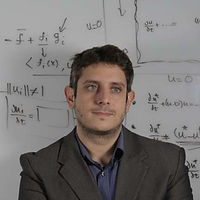
Themistokils Sapsis
Associate Professor of Mechanical and Ocean Engineering at MIT
His research interests include uncertainty quantification, data science, extreme events, fluid dynamics, and ocean engineering.

Justin Solomon
Associate Professor of Electrical Engineering and Computer Science at MIT
His research interests include computer graphics, geometry processing, and machine learning.
From Our Students
"The course allowed me to put new knowledge into practice immediately through assignments, which deepened my understanding. The professors offered valuable insights and broadened my perspective, making the learning journey truly enriching."

Anderson W.
Peking University
College of Engineering

FAQs
Can I use the assistance of generative AI in my course?
No, unlike our policies for PBLs, using LLMs like ChatGPT, Google Bard, or Claude AI for SPOC assignments is strictly prohibited. Violations may result in severe consequences, including a failing grade, losing your certificate, or being banned from future courses.
Will I receive MIT credits for completing the course?
No, MIT xPRO courses are non-credit professional development programs. However, you can earn Continuing Education Units (CEUs) recognized in the US as evidence of your professional development.
What are the course and assignment deadlines?
Your SPOC platform will have a timeline that shows when assignments are due. Many SPOCs require all assignments to be submitted by the course end date, however this is not true across the board. Deadlines are strict, and late submissions are not accepted, however some courses allow dropping your lowest scores to accommodate missed assignments. Check your specific course policy for details.
Will I have access to the course material after the course ends?
Yes, you’ll have indefinite access to archived course materials after the program concludes. However, live support (instructors and forums) is available for only 30 days post-course. Downloadable materials remain accessible forever.
Will I receive an official certificate?
Yes, you will receive an official certificate of completion for a SPOC, provided you meet the following criteria:
-
Complete All Course Modules: Finish all required modules, including readings and activities.
-
Pass Required Assessments: Achieve passing scores on quizzes, assignments, or exams set for the course.
Meeting these standards confirms your understanding and engagement, qualifying you for the certificate.
In what language are courses taught?
All courses are conducted in English.
Are courses live or pre-recorded?
Courses are pre-recorded for flexibility, allowing you to access materials anytime.
Can I interact with instructors or other learners?
Yes, there are discussion forums on the MIT xPRO platform. Some SPOCs may also feature optional live sessions with the instructor.
What time zone are deadlines listed in?
Deadlines are in UTC. Use this time converter to match it with your local time.
What are the technical requirements for the course?
For the best experience, using the latest versions of Chrome or Firefox is recommended. Mobile access is limited, so completing the course on a laptop or desktop is recommended.
Are video captions available?
Yes, all videos have captions and downloadable transcripts for easier study and review.
How do I complete a course?
To complete a course, fulfill the requirements for scored assignments. You can find detailed information on assignments and deadlines in the "Get Started" tab on the MIT xPRO Learning Platform after enrolling.
Are grades awarded?
MIT xPRO uses a pass/fail system; no specific grades are given. You must earn a minimum number of points to pass and receive a certificate. Be sure to review the Course Schedule for deadlines, as late submissions are not accepted.